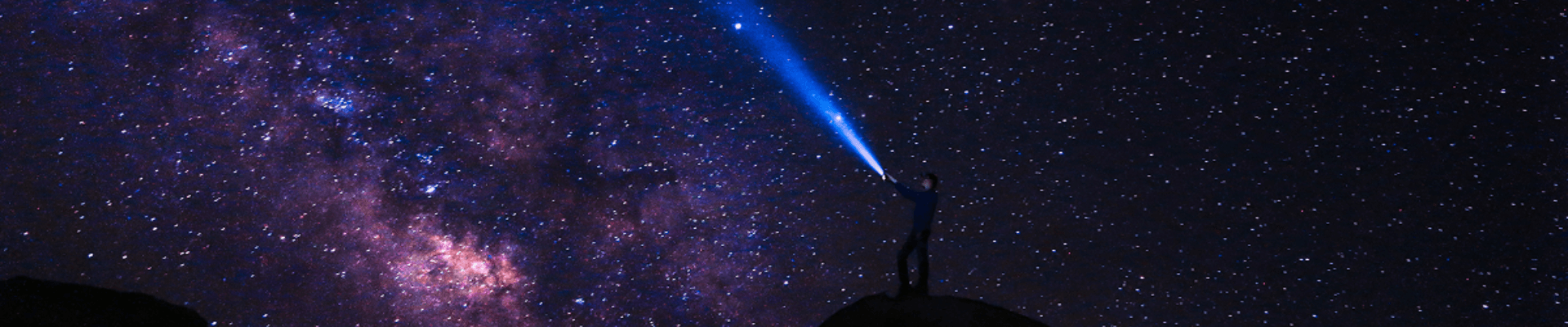
Where We Must Begin – The Self
We spend our whole lives defending someone who was never quite real. The face we show, the story we tell about ourselves, the image we maintain, the version we protect and polish and mistake for solid ground: none of it is at all as fixed as it feels. What we call “self” turns out to be less a single, stable thing and more a passing arrangement: a shifting pattern of thoughts, roles, memories, and reactions that we’ve learned to call “me.”
This is where we begin: not by tearing down the self, but by looking closely at the compound faculties that combine to create the feeling of being someone fixed and finite. And when we explore closely enough, we find something far beyond anything we could have ever imagined. The finite self we thought we knew so well turns out to be the very doorway to something infinitely vast, intricate, and astonishing: an experience so much richer than the small, fixed picture we had, thus far, settled for.
Below, each chapter unpacks a different thread of this. Click through to explore.
1. The Question That Everyone Needs to Ask
“Who Are You, Really?”
“Who am I?” Few questions appear so simple, yet none reach so deeply into the heart of our existence. Are you merely a stream of reflection and memory, of worries and hopes, passing through the mind before vanishing again into silence? Or does something far more fundamental stand behind the shifting movement of personality and perception?
The truth of what you are lies beyond the grasp of the senses, for the senses reveal only outer surfaces, forms, and appearances. To ask sincerely “Who am I?” is to step beyond the familiar boundaries of thought and sensation into a vast territory that neither intellect nor perception can really ever penetrate. It is the first real question of existence, because until one understands the nature of the self as the fundamental observer, every attempt to understand the world remains incomplete at its foundation, much like a scientist attempting to measure reality without first examining the instrument through which those measurements are made.
From this single inquiry all others naturally emerge. What is this world? What is the universe? What is existence itself, and what is the purpose of human life? Yet beneath every philosophical system, every scientific model, every spiritual doctrine, and every human discovery, there remains one unavoidable question from which none can escape: “Who am I?” This is not one question standing alongside the others, it is the ground beneath them. Every exploration outward, into matter, into history, into other people, into the stars, is still only ever an experience arriving inside the one who is looking. We cannot climb outside ourselves to check whether our reading of the world is accurate, and so no inquiry into what lies “out there” can ever reach further than the instrument doing the looking. Self inquiry is therefore not one department of investigation among many, it is the only place any investigation can actually begin.
Humanity has spent aeons studying the stars while remaining almost entirely unfamiliar with the nature of the one who gazes upward at them. We investigate matter, energy, biology, chemistry, and physics with extraordinary diligence, yet the one who experiences all of this remains largely assumed rather than understood. Philosophy, and more recently cognitive science and sociology, have each added their voice to these great questions, attempting to explain what it truly means to be human, what we are, and what we are doing here. And yet for all their effort, these inquiries rest on foundations of supposition, opinion, and subjectivity, leaving us, in the end, no closer to a satisfying answer than when we began.
From the sensory process we all have there arises a powerful illusion of separation, and we experience ourselves as isolated beings, a distinct “I” standing apart from a world that appears external to us. Yet this division is sustained entirely through perception itself, the intellect divides reality into subject and object, observer and observed, self and other, continually reinforcing the impression of a separate individual until the illusion becomes so familiar and ingrained it is mistaken for truth. In doing so, it obscures the deeper underlying unity of all things, and here begins the descent of the individual, where life is no longer felt as a seamless whole but as a field of opposing parts, each competing for meaning, each cut off from its source and seemingly without connection to the rest.
Great Kabbalists including Isaac Luria said that the sense of separation arises through the limitations of perception, while Baruch Shalom Ashlag explained that the sense of self functions as a necessary instrument for navigating physical existence, though not at all the truth about who we are. And, as Yehuda Ashlag wrote: “We have no perception or attainment whatsoever in anything outside of us.”
What we ordinarily call the self is constructed from shifting sensations, memories, desires, inherited assumptions, and accumulated impressions, fears and desires. It is convincing, functional, and deeply persuasive, yet entirely dependent upon the very processes that produce it. Look closely at what you ordinarily take yourself to be. A body? A face reflected in the mirror? A personal history, a collection of memories, certain fears and ambitions? Whatever identity you presently hold, young or old, wealthy or poor, admired or forgotten, all such identifications belong only to the surface of things, and all of it continues changing throughout your life. The child becomes the adult, roles shift, circumstances alter without warning, and your personality moves and changes with the passing years, and what once seemed essential fades quietly into the background as new concerns arise to take its place. Even the body alters so gradually that identity appears continuous, yet over time one becomes almost unrecognisable from the person one once believed oneself to be. Humanity mistakes this inner construction for an independent and enduring reality, assuming the self to be fixed and absolute when in truth it is a continual movement arising within a greater field of perception itself. All of this leaves us in a profoundly unsettled state of flux, forever striving, momentarily satisfied yet inwardly unfulfilled, endlessly pursuing permanence within a world where all things fade and pass away.
Yet beneath these passing forms there exists something altogether different, something silent, immeasurable, and untouched by the ceaseless movement of daily life. It is nearer to you than your own breath and more intimate than your own heart beat, yet precisely because of this intimacy it escapes ordinary recognition. It cannot be seen as an object because it is that by which all objects are known, and it cannot be grasped as a thought because it is the very ground from which thought arises. Turn inward then, not toward imagination or fantasy, but toward that which has never once departed from you. Ask yourself with genuine sincerity:“Who am I, truly?” Are you a passing thought moving briefly through the mind? a sensation arising within the body? a fleeting emotion, a bundle of desires seeking fulfillment, or merely a collection of impressions and wants inherited from family, society, and the ever changing circumstances of life? All of these appear and disappear continually, yet something remains present through every change you have ever known.
Pause here for a moment and try this little experiment for yourself. In a quiet moment of solitude and awareness silently ask yourself: “Who am I, really?” Now notice the voice that just asked the question. Where did it speak from? There was no sound, no utterance into the room around you, and yet you heard it clearly enough. Notice something stranger still: something also heard that very same voice ask the question there is an awareness which is both the speaker and the listener but no words were ever spoken. What is that? Sit with this for a moment. Where, in truth, are the voice that spoke and the presence that heard it, seated? This is not an idle exercise, for that which posed the question and that which heard it are not separate at all as both point back to the same thing: the voice of your truer self, awareness itself, beyond any definition, title, or moment in time.
That which you truly are does not appear, and therefore cannot disappear, it does not begin, and therefore cannot end. Beneath the restless movement of experience that constitutes our daily lives, there is a still and profound continuity of awareness, untouched by time itself. Even within modern science there are echoes of this deeper recognition. Max Planck wrote: “I regard consciousness as fundamental. I regard matter as derivative from consciousness.” And Erwin Schrödinger said: “The total number of minds in the universe is one.” These are not poetic statements but the considered reflections of thinkers who followed the evidence to its limit and found themselves standing at a frontier where the instrument of inquiry itself could no longer proceed.
And here lies the significance: the very limits that govern our physical, mental and sensory perception of the world are also the boundary against which humanity presses. It is a moment in which inquiry itself turns back upon its own foundations, and humankind begins to recognise that any attempt to study the external world is inevitably constrained by the nature of the instruments through which it is known, as though one were looking out toward an infinite reality from within a confined aperture, mistaking the shape of the aperture for the shape of the world beyond it.
To discover your deeper identity is not to become something new, but to recognise what has always been present beneath the movement of thought, identity, personality, emotion and sensation. Yet as this recognition approaches, resistance always appears. The mind insists the inquiry into self is unnecessary, or claims the answer is already known: “I am this person, this name, this history.” But what precisely is this “I” that speaks with such certainty? When examined directly, the solid image of self begins quietly to loosen, and what once seemed unquestionably fixed becomes strangely elusive, for the question “Who am I?” is not merely one question among many, it is the question beneath all questions.
Throughout life we search for identity through possessions, achievements, relationships, status, and recognition, hoping that some external definition will finally provide the self with certainty and a sense of completion, yet every identity eventually proves insufficient, every role passes, and every accomplishment fades into memory. Yet beneath all this striving there persists a quiet but insistent sense that something essential about oneself has not yet been understood, and it is here that genuine self inquiry begins. To arrive at this moment with earnestness, with wholeness of attention, and with unflinching honesty, undistracted by the noise of the world, is itself no small thing. It is, in truth, a milestone, for until this question is asked in a true spirit, life proceeds almost entirely upon an unexamined assumption: that one is a separate individual, moving through a world of equally separate things.
But when the sense of self is examined carefully and without avoidance, something unexpected begins to occur. The “I” which once appeared so solid begins to waver under scrutiny, and no permanent centre can ultimately be found.
Desire reveals the same instability, what once felt urgent becomes irrelevant, and what is passionately pursued today will one day be set aside without a second thought, yet this wanting continues endlessly, one object giving way to the next, one achievement to another. Still, through every joy and sorrow, every triumph and loss, something has remained unchanged. Quietly and without interruption, an inner presence has witnessed every moment of your existence. Mistaking oneself for the shifting contents of awareness inevitably produces instability, because thoughts, emotions, possessions, and identities rise and fall without ceasing, while the ever present awareness remains untouched by their movement.
Continue following the question to its source: “Who am I?”
If pursued with genuine sincerity, a remarkable recognition begins gradually to emerge: that no separate self can ultimately be found. There is only awareness itself, indivisible, open, and inseparable from existence. This awareness is not something you possess, it is what you are. When every label, desire, emotion and definition falls away, what remains is this silent and unchanging presence, untouched by thought and free from limitation. It existed before the first notion of “I” arose within your mind and remains the silent foundation upon which every experience appears and disappears. To recognise this is not to acquire something new, but simply to see clearly what has never once been absent from you.
The misunderstanding of identity lies at the root of human unrest, for in taking ourselves to be isolated beings bound entirely to passing forms and transient conditions, we seek permanence where none exists and attempt to anchor certainty within a reality of continual change, an attempt that was always destined to fail. And in that failure, visited upon each of us in turn, lies the root of so much toil, suffering, loss, struggle, tragedy, and pain. From this confusion arises the hidden tension beneath life, the ceaseless striving, grasping, and dissatisfaction that follows humankind wherever we go.
A reflection, a memory, a passing stream of thought, just as at the beginning, still these appear and still they vanish, and still the one who has watched them all remains.
And so we return once more to the great inquiry, now toward the faculties through which human experience itself unfolds. There is the physical body, the most immediate and tangible aspect of the self, alongside the intellectual and emotional realms through which thought, feeling, imagination, memory, and desire continually arise. Each vehicle of the self must be examined carefully both in itself and in relation to the whole of it, for only through such inquiry can a fuller understanding of what we call the self begin to emerge. With this foundation established, we may begin with the physical body itself, the most visible expression of human existence and the first doorway through which deeper inquiry unfolds.
And so we come to understand each of the principal parts which constitute the human being. Click upon a title below to open it, revealing the portion of the self explained within, and click again to close it. In these drop down sections the compound nature of the human being will be better understood, each part a distinct expression of the self within a single structure, complete and yet bound to every other part that stands beside it.
2. The Physical Body
The Most Apparent Vehicle of Expression
The physical body, the form we most closely identify with as the self, appears solid, immediate, and complete, a finely wrought structure through which life is plainly expressed. The figure that looks back from the mirror presents itself as something fixed and finite, a settled image seldom questioned, and yet it is only the outermost layer of something far more profound within. The body lives and moves by virtue of a force that courses silently through every cell and fibre, a subtle vitality that neither falters nor announces itself, guiding countless processes with a quiet and unspoken intelligence of which we possess little direct awareness.
For all the precision and wonder of the human body, it does not govern itself in isolation, but is sustained moment by moment through an underlying order that holds its innumerable processes in seamless coordination. Modern biology names one expression of this principle homeostasis: the continual balancing of temperature, acidity, oxygen, digestion, elimination, and countless other processes, all maintained within extraordinarily narrow limits, without conscious effort or intervention. The heart does not decide to beat, the lungs do not consult the intellect before drawing breath, and the immune system responds to threat without instruction from the conscious mind.
Life sustains itself from within, according to principles that precede intellectual awareness altogether.
As Walter Cannon observed, the organism is maintained through a coordinated physiological process which holds most of its internal states in stability. What is remarkable is not the precision alone, but the absence of any intellectual consciousness presiding over these countless functions as we ordinarily conceive it. The body behaves as though intelligence is woven throughout the entirety of its structure rather than confined to any single point of control.
In the language of Kabbalah, this may be understood as the unfolding of layered degrees within creation itself, where the still, vegetative, animate, and speaking exist not only in the world externally but are contained within every human being. The human being is not a simple unity but a hierarchy of interwoven forces, each nested within the other and each sustaining the next. The physical body represents the most bound expression of this structure, yet even in its density it carries traces of all that precedes it. Nothing within such an arrangement is accidental, and the emergence of such an intricate structure into conscious existence, without recollection or deliberate design on the part of the individual, points toward an ordering principle operating far beyond the narrow limits of personal cognition.
Even at the level of a single cell the depth of this coordination becomes unfathomable, within each cell thousands of simultaneous processes unfold continuously: protein synthesis, energy conversion, molecular repair, communication, and replication, all occurring with extraordinary precision. What appears outwardly as a single unified body is in truth a vast living ecology of interdependent systems acting together in harmonious continuity all governed by an intelligence beyond the reach of definition or comprehension.
Yet even this intelligence has its limit. When death arrives, this coordination releases its hold, the organising principle withdraws, and what was once sustained in unity begins slowly to disperse. Cells break down, molecules separate, and atoms return to the wider field from which they arose. Nothing is truly destroyed, only the form dissolves, and the life that once held the structure together does not vanish into non-existence but re-enters the greater continuity of nature itself, where all things are transformed yet nothing is ultimately lost. As Erwin Schrödinger reflected, “what we call material reality is not fixed substance but a temporary ordering of relationships and underlying fields,” and the dissolution of the body is not an absolute ending but a reconfiguration, a return of form into the greater reservoir from which all forms emerge and to which all forms return.
This rhythm of emergence and dissolution extends far beyond the human body, it is visible in the seasons, in ecological systems, in cellular regeneration, and in the birth and collapse of stars themselves. Modern cosmology describes matter continually reforming across immeasurable spans of space and time, each phase giving way to the next with an inevitability that neither asks permission nor offers resistance. Nothing stands apart from this movement and everything participates within it. You are not separate from this process, nor do you stand outside it as a detached observer. You are woven into it as a living thread within a far greater whole, a fragment reflecting the pattern of the entirety of existence itself. What appears as your individual life follows the same principles governing the seed, the tree, the changing seasons, and the stars overhead, and even modern physics affirms this continuity in recognising that energy is never destroyed but only transformed, passing ceaselessly through different states and expressions.
Yet in taking yourself to be isolated, self-contained, and fundamentally separate from the whole, perception narrows and contracts, and the sense of individuality, though necessary for physical existence, becomes mistaken for the entirety of one’s being. Humanity experiences itself as disconnected from the greater movement of life while remaining, in truth, utterly sustained by and inseparable from it at every moment.
The physical body is not the self in its fullness but the outer garment through which deeper levels of life move and express themselves. It is a temporary vessel, delicate and transient, through which experience, relationship, struggle, growth, and perception become possible for the individual. It must be maintained with care and respect, yet never mistaken for the essence it carries. Beneath sensation, beneath thought, beneath the changing movement of personality and circumstance, there remains the silent witness, the abiding sense of “I” that persists through every transformation of life. Body and sense serve as instruments through which experience unfolds, yet the deeper movement of the self is not bound to either; it moves steadily toward recognition of its own continuity, vastness, and inseparable relation to the whole of existence itself.
Beyond the physical body the human being extends into subtler realms: intellectual, emotional, and imaginative. These are not subsidiary faculties suspended upon matter but active and inseparable dimensions of experience. The intellect permits discernment, abstraction, comparison, and the formation of meaning, providing the framework through which reality is interpreted and understood, while emotion gives movement, direction, desire, and value to experience itself. Antonio Damasio captured this inversion of a common assumption when he observed that ‘man is not a thinking machine that feels, but a feeling being that thinks.’
In Kabbalah these layers of physical existence, thought, feeling, and will are understood as distinct yet inseparable instruments within the structure of the self. Intellect without feeling becomes sterile and directionless, while emotion without intellect becomes an unformed and chaotic force. Both remain anchored within the physical vessel through which they find expression, and only through their alignment does a coherent and integrated human being emerge, capable of perceiving reality without inner fragmentation. Humanity stands as a living microcosm of a greater whole, and the structure of the body, the architecture of thought, and the currents of emotion and passions all reveal the presence of a deeper organising intelligence permeating both the individual and existence itself.
To study these aspects in isolation is to perceive only fragments of this far greater continuity. In recognising them together, the sense of inner division gradually softens, and life is no longer experienced as a conflict between competing parts in opposition, but as the movement of one continuous intelligence expressing itself through many forms.
From here, inquiry naturally deepens further into the powers of sensation allotted to humanity, the five narrow channels through which an eternal reality is admitted into limited experience, and through which the vastness of existence is filtered into the finite field of individual perception.
3 The Five Senses
The Limiting Powers of Sensation
Humanity apprehends the world through five narrow avenues of sensation: sight, hearing, smell, taste, and touch, each admitting but a fraction of the infinite reality in which they exist. All external impressions must pass through these slender channels before the mind reconstructs them within, and what emerges is never the thing itself, but only a representation fashioned internally. The objects of sense, in their totality, remain forever beyond direct reach. For the senses are not windows onto an infinite reality but filters, shaping and confining a boundless existence into forms the finite mind can hold.
To understand why this is so, it helps to consider how humanity arrived at these five instruments and what they represent within the larger movement of existence. Human life did not arise in isolation but is the culmination of a vast and unbroken development stretching back to the earliest stirrings of existence. From primordial matter and the first condensation of energy into form, through the inanimate kingdom of mineral structure, life unfolds in continuous stages. From this arise the earliest microbial organisms, the first expression of organic life, and from these the vegetative kingdom, and then the animal kingdom, with transitional forms such as fungi and coral serving as quiet bridges between great thresholds of development. Nature leaves no rupture unbridged. Between each kingdom there exist intermediary expressions through which continuity is preserved, where life is neither one form nor the next but a movement between them, holding both within a single unfolding process.
Up to this point the movement is immense yet largely unconscious, unfolding according to law, until there appears what may be called the apex, the animal human, not yet fully human yet standing at the threshold of a new kingdom yet to come. What distinguishes this stage is not merely perception but reflexive awareness, the capacity to know that one knows, to turn experience inward and recognise oneself as the subject of it.
From animal to human there is no rupture, only steady continuity, each stage carrying forward what preceded it, nothing lost and nothing severed. We are the culmination and synthesis of all that has gone before; the earlier kingdoms live within us in a literal sense. The mineral persists in bone and structure, the vegetative in growth and organic processes, the animate in instinct and impulse.
Yet beneath these visible forms lies a far deeper process. Kabbalah states that all of creation unfolds through the development of the vessel (Kli, כלי), meaning the capacity to receive, experience and respond to reality. What appears outwardly as the emergence of kingdoms and worlds is inwardly the gradual expansion of the Will to Receive (Ratzon Lekabel, רצון לקבל) itself. The still or mineral (Domem דומם) represents the first and most limited expression of this desire. The vegetative (Tzomeach צומח) is not merely a more advanced form of matter but a profound enlargement of the vessel, revealing capacities that did not previously exist: with the power of growth this kingdom adapts and reaches beyond its present condition. The animate (Chai חי) marks an even greater expansion, introducing sensation, some individuality, movement, memory, pursuit and avoidance. Nothing is abandoned in this progression; each new degree enfolds and contains the previous one, carrying it forward into a broader and more developed form.
Thus the journey from still to vegetative, from vegetative to animate, and from animate to speaking, is the story of a single desire steadily awakening to its own potential as it broadens. What began as the faintest capacity to receive gradually becomes a vessel vast enough to encompass sensation, perception, thought, self-awareness and, ultimately, the possibility of perceiving the very source from which its existence proceeds.
And yet, for all this grandeur, humanity remains bound within a narrow field of awareness and understanding of the vastness of their existence and their whole life is defined by the interplay of opposites: light and darkness, sound and silence, pleasure and pain, joy and sorrow, bitterness and sweetness. It is through these relations alone that experience is structured. The organs of sense, remarkable as they are, do not grant direct access to reality itself but interpose a mediating layer through which all must pass before becoming known.
Light does not arrive as light in itself but as electrical impulse after passing through the retina. Sound is not heard as it exists but as vibration translated through the structures of the ear. Taste, smell, and touch likewise do not reveal things as they are but only the effects produced upon the corresponding receptive organs of sense. Humanity does not meet the world directly but encounters impressions formed within one’s own system, much as one attempting to reconstruct a vast landscape from a handful of scattered fragments. The senses operate not through direct apprehension but through contrast. Heat is known through its relation to cold, light through darkness, sound through silence, sweetness through bitterness. Perception is structured through polarity, where one aspect is intelligible only through its counterpart, and what appear as opposites are in truth complementary expressions of a single underlying reality. Thus everything humanity takes to be outside has already been drawn inward, transformed, and interpreted before awareness arises. The distinction between perceiver and perceived begins to blur, for what is called the external world exists only as internal experience, assembled from impression and organised by the intellect into the appearance of coherence and continuity.
Relying upon such finite and limiting faculties, humanity comes to believe that they stand apart from a world external to themselves, and search outwardly for what is already filtered through inward structure. All human knowledge, however refined and advanced, continues to elaborate this same foundation, extending reach without escaping the condition that produced it. As Isaac Luria expressed, “all that is perceived is within the perceiver, for the form of perception is determined by the vessel that receives it.” This was long recognised by the clearest minds of East and West alike. Kant observed that we can know things only as they appear to us, never as they are in themselves, and the same recognition surfaces wherever thought has turned honestly upon itself: the instrument of knowing shapes everything it makes contact with.
Reality itself lies absolutely beyond the reach of sensory construction, not because it is distant but because it is not an object among objects that can be sensed. It is not something to be perceived but the ground within which perception arises. At times we feel this truth hinted at through music, through silence, or through those rare moments in which inner activity grows still, yet it cannot be held or contained, only approached when interpretation quiets and the relentless movement of the mind momentarily ceases. What humanity calls our world, our experience, and even ourselves, is a reflection shaped through the narrow gateways of perception and organised along the axis of opposites. Beyond these conditions there is a reality that is not divided, not conditional, and not fragmented into parts. Though it cannot be grasped through ordinary faculties of sense, this force remains ever present, not hidden in distance but veiled by the very activity of interpretation itself.
The central error of humankind, then, is this: humanity assumes that their senses and intellect grant them direct access to the truth of things, when in reality they present only a narrow rendering, a shadow cast upon the inner walls of consciousness. From this misapprehension emerges the illusion of the self, which is not an independent entity standing apart from reality, but a construct arising within the very field it seeks to comprehend. It is an error as old as human thought itself, and none have illustrated it more beautifully or more enduringly than Plato, in the parable of the Cave.
Yet even the senses, for all their complexity, represent only the outermost instruments of human experience, presenting to each man the shadows in Plato’s Cave. Beyond the physical body and its five avenues of perception there exists a far subtler faculty, one that does not merely receive impressions from the world but organises, interprets, abstracts, and reaches toward meaning. This is the intellect, the manifold mind of mankind which functions along other lines, a realm so vast in its latent capacity that humanity has barely begun to understand what it actually is, let alone what it might become. It is to this faculty, and to the deeper intelligence that moves within and behind it, that we now turn.
4. The Manifold Human Mind
The Indwelling Intelligence
Of all the levels through which existence has ascended, from the still to the vegetative, from the vegetative to the animate, humanity stands as the most complete expression. And we alone carry within the full inheritance of every level through which we have passed and add to it something none of those levels possess: the capacity for self-reflection, for moral choice, and for a conscious relationship with the force from which all life derives. We have access, should we choose to exercise it, to a power of mind and will that can advance not only ourselves but the entire human race with them. And yet they do not arrive at such humanity unencumbered, for they carry with them, woven into the very fabric of their nature, the accumulated drives and impulses of the long animal ascent through which their form was shaped. These base drives and instinct are not flaws or failures but are entirely right and proper to the levels for which they were fashioned, but in humanity they persist beyond their proper jurisdiction, pulling against the higher nature even as it strains upward, dragging toward appetite and reaction what might otherwise rise toward understanding and will. And it is here that the danger peculiar to humanity alone announces itself, for unlike the beast, which follows its nature without the means to do otherwise and so is right and proper, humanity possesses the additional power of conscious thought and deliberate intellect, and they may turn these very gifts toward the amplification of their lower drives. Greed, lust, envy, the hunger for dominion and control, these are not merely animal impulses in humanity but are base impulses refined and magnified by their intelligence, and their consequences do not remain with the individual who indulges them but radiate outward into the whole fabric of life.
To understand how such drives can be governed rather than indulged, it is necessary first to understand the instrument that must govern them. Kabbalah recognises that the mind of humanity does not operate as a single, uniform instrument. It unfolds across three distinct levels, each with its own character, its own domain, and its own relationship to the intelligence from which all mind ultimately derives. The first and deepest of these is older than language, older than reason, older perhaps than the human form itself. It is the intelligence that holds the living body in continuous being, governing and sustaining all that life requires below the threshold of awareness. The second is the faculty that distinguishes the human being most sharply from the rest of creation, the capacity for reflection, reasoning, and self-consciousness, through which humanity has built every civilisation and charted every science. The third is not yet fully possessed by most of humanity, but it is the direction in which the entire ascent is moving, a mode of perception in which the rigid boundaries of individual selfhood begin to dissolve and the underlying unity of existence gradually becomes apparent. These three, the Instinctive Mind, the Intellectual Mind, and the Higher Mind, are not separate instruments but a single unfolding power, expressing itself through progressively finer registers as the human being advances. To understand what humanity is, and what they may yet become, it is necessary to understand each of them in turn.
The Instinctive Mind: In Kabbalah, this is the intelligence of the animate level, the living stratum of existence that sustains material form in motion and governs the myriad functions and systems of the body. It is not a property that matter develops when sufficiently complex but a force that matter receives when the conditions for advancement are met. Every creature that breathes participates in it without owning it, is sustained by it without commanding it, and returns it intact when the particular form it animated has run its course. It is older than any species and native to none, and in humanity it runs as the deepest and most constant current beneath everything they are. But it is more than a biological function. It is an expression of an eternal and permeating force, and to understand what that means it is necessary to understand what Kabbalah calls the Will to Receive.
The Will to Receive is not mere desire in the ordinary sense of the word, not the wanting of this thing over that thing. It is something far more fundamental: the basic impulse of existence itself to draw toward it, to take form, to persist, to expand. It is what makes the root press through stone toward moisture in the darkness beneath the earth, what makes the infant cry before it knows language or self, what drives the philosopher toward understanding. These are not the same impulse in kind, but beneath all the differences of form and intention the same original force is at work, a receptive will at the very ground of being, older than any of the shapes it inhabits.
The Instinctive Mind in humanity is not a remnant or a relic of something they have largely outgrown. It is creation’s primary intelligence wearing the form of a living being. This force is not unique to humanity, and the Kabbalists are precise on this point. The still, the vegetative, the animate, and the speaking are not merely categories of the outer world but living elements within every human being. Humanity contains them all. They do not transcend the animate by virtue of their speech and reason; they carry it within them as the foundation upon which everything higher rests. The first stirrings of this intelligence can be traced through the entire scale of existence, in the mineral kingdom it appears in its most latent form, present as nothing more than the coherence of structure itself, matter holding its shape, its form, its physical properties against the tendency toward dissolution. In the plant it quickens, governing growth, the drawing of nourishment, the slow turning toward light. In the animal it opens into a still wider range of expression: the migrating creature navigates distances that would defeat human reason unaided, and each species carries within it precisely the capacities its situation requires, without instruction, without deliberation, without error. In the highest forms of animal life this intelligence approaches, by degrees, something that begins to resemble the Intellectual Mind, that higher faculty which in humanity opens above and beyond it. This is the scale through which the instinctive intelligence has traveled, and humanity stands at its summit while carrying within themselves every stage of the ascent.
It must be understood that in humanity this faculty of mentation extends beyond the governance of the body, important as that work is. The Instinctive Mind is also the storehouse of everything that has been learned, practiced, desired, and absorbed by the individual until it no longer requires the attention of the conscious intellect. The navigator who once had to work through every calculation deliberately comes, over years, to read the sea and sky as a single unbroken impression, the knowledge no longer something they think but something they have become. The surgeon who began with precise and anxious attention eventually operates with a sureness that conscious effort alone could never produce. What the intellect first mastered with effort, the Instinctive Mind receives and carries forward without intellectual labour, freeing the conscious attention for what is new and as yet unlearned. This is an arrangement of extraordinary intelligence in itself, and the word we reach for when describing it is skill, though that word barely suggests the depth of what has occurred when something once learned with difficulty has passed so completely into the interior that it operates without thought.
The Instinctive Mind is among humanity’s most indispensable servants, for without it every act of daily life would demand the full weight of concentrated thought and they would quickly exhaust themselves. But it is also, precisely because of its faithfulness, the seat of what we call habit, absorbing not only the best of what the intellect has cultivated but equally the worst of what it has allowed to pass unchallenged. Whatever is repeatedly impressed upon it, for good or ill, it will carry out with the same impartial diligence. The ancient verse from the Book of Job captures something precisely true about the unexamined condition: “Man is born a wild ass,” this is not condemnation but description. The wild ass is not cruel or malicious; it is simply driven, pulled this way and that by forces it does not recognise, mistaking every impulse of the Instinctive Mind for its own sovereign will, never quite arriving, never quite still. This is the condition of humanity before they turn their attention inward, before they begin to distinguish between what they are and what is driving them. Advancement does not begin with the destruction of these drives but with their recognition, and recognition alone begins to shift the balance in their favour.
There is one further dimension of this faculty that demands honest acknowledgment. The Instinctive Mind carries within it the residue of the entire animal ascent. The base drives and instincts that served the creature in its earlier and more vulnerable forms, the fighting response, the impulse toward domination, the pull toward appetite and gratification, have not been erased by the emergence of reason, and in undeveloped or unguarded conditions they assert themselves with a force that can surprise even those who consider themselves well beyond such things. Kabbalah does not ask us to be ashamed of this heritage. Rabash observed plainly that a person cannot move even a finger unless some benefit for themselves compels them, and this is not a criticism of humanity but a sober account of how the inner life actually operates before higher intention awakens within it. Baal HaSulam expresses the same understanding: all progress in the world results only from the force of desire. The hunger, the ambition, the refusal to accept limitation, these are not the obstacles to human development but the very fuel by which it proceeds, for without a Will to Receive humanity would be fixed and inanimate, with no impulse whatsoever toward advancement. The recognition of this is not cause for despair but the beginning of genuine self-knowledge.
The task is not to condemn these impulses, for they served a right and necessary purpose at the level for which they were fitted. The task is to know them, to understand their origin and their nature, and through that understanding to bring them into the service of the higher orders of thought rather than remaining at the mercy of the lower ones. The Instinctive Mind is not an adversary to be suppressed but a vast and ancient intelligence that, rightly ordered, becomes one of the most powerful instruments available to the human being as they advance toward the next faculty of mentation.
Kabbalah states the above with precision as follows; the vital force that animates the body and drives its hungers corresponds to the Nefesh (נֶפֶשׁ, “breath” or “throat”), the most immediate and earthward layer of the individual, the one humanity shares with the animal kingdom. Above it stirs the Ruach (רוּחַ, “wind” or “spirit”), the emotional and volitional self, the seat of character and inner life, through which humanity begins to feel the pull of something beyond mere survival and appetite. Higher still is the Neshama (נְשָׁמָה, “breath” or “breath of life”), the reasoning part of the human being, the faculty through which we observe, reflect, analyse, and draw conclusions, the principle that has built every civilisation and produced every work of human genius. Yet even the Neshama (נְשָׁמָה) is not the summit, above this Kabbalah places the Chayah (חַיָּה, “living one” or “life itself”), the supra-rational self, described in the Zohar (זֹהַר, “radiance” or “splendour”) and elaborated by the Chassidic (חֲסִידִי, “of lovingkindness”) masters as the seat of will and higher knowing that no exercise of the reasoning mind can reach. The brute nature exerts its pull downward, and it is strong, but the Chayah (חַיָּה) reaches down from above, and for those who choose to attend to it, it will sustain what the lower nature would otherwise drag back into the mire. The intellect may approach its threshold but it cannot cross it by its own power, and it is toward that threshold, and what lies beyond it, that we now turn.
The Intellectual Mind: We now reach the mental principle which most sharply distinguishes humanity from the rest of the living world. The lower intelligence they share with the animate kingdom, but when this higher principle begins to unfold within them, they feel something awaken that is native to them alone, what we may call their humanity in the deepest sense of the word. It must be remembered, however, that there is no violent rupture or sharp boundary between the Instinctive Mind and the Intellectual Mind. These principles shade into one another as colours shade across the spectrum, and it is only in retrospect that the transition becomes visible at all.
Before the Intellectual Mind properly unfolds, the creature possessing even the most developed instinctive faculties has passions but no reason, emotions but not intellect, desires but no reasoned will. It is the brute awaiting the coming of that which will transform it into a human being. And even when the first light of the conscious mind begins to appear, and the creature begins to think and reflect rather than simply to feel and react, it is still in the earliest stages of this intellectual unfoldment. Among the lower forms of life there is very little of what we can honestly call consciousness. The mentation is almost entirely instinctive, concerned with physical survival and the satisfaction of primitive wants, but after a time this primitive awareness develops into what may be called simple consciousness, an awareness of things outside the self, a perception of the world, yet still without any capacity to turn inward and reflect upon that very act of perceiving.
With the full dawning of self-consciousness, everything changes, humanity begins to form a conception of the I. They begin to compare themselves with others, to reason about what they find, to take stock of their own mind and draw conclusions from it. They begin to think for themselves rather than blindly absorbing the mental emanations of those around them. They begin to create rather than merely to receive. And from this first glimmer of conscious intelligence has grown the entire edifice of human civilisation. Richard Maurice Bucke, writing in Cosmic Consciousness in 1901, expressed the scale of this ascent in words that bear quoting in full, for no compression of them would do them justice:
Self-consciousness is a thing easy to comprehend but difficult to define. Without it a creature may know, but only by its aid is it possible for a being to know that they know. And it is this reflexive capacity, this ability to observe the observer, that marks the true beginning of the human. Once self-consciousness is fully awakened, once the I has been felt and recognised, the real life of the individual person begins in earnest. Many trials lie ahead and many obstacles must be met, but there is no going backward on this path of advancement.
“For some hundreds of years, upon the general plane of self-consciousness, an ascent, to the human eye gradual, but from the point of view of cosmic evolution rapid, has been made. In a race, large-brained, walking erect, gregarious, brutal, but king of all other brutes, man in appearance but not in fact, was from the highest simple-consciousness born the basic human faculty self-consciousness, and its twin, language. From these and what went with these, through suffering, toil, and war; through bestiality, savagery, barbarism; through slavery, greed, effort; through conquests infinite, through defeats overwhelming, through struggle unending; through ages of aimless semi-brutal existence; through subsistence on berries and roots; through the use of the casually found stone or stick; through life in deep forest, with nuts and seeds, and on the shores of waters with mollusks, crustaceans, and fish for food; through that greatest, perhaps, of human victories, the domestication and subjugation of fire; through the invention and art of the bow and arrow; through the taming of animals and the breaking of them to labor; through the long learning which led to the cultivation of the soil; through the adobe brick and the building of houses therefrom; through the smelting of metals and the slow births of the arts which rest upon these; through the slow making of alphabets and the evolution of the written word; in short, through thousands of centuries of human life, of human aspiration, of human growth, sprang the world of men and women as it stands before us and within us today with all its achievements and possessions.”
Yet the awakening of intellect does not by itself make the creature a better being in the moral sense. While it is true that every unfolding faculty carries within it an upward tendency, it is equally true that some people are so deeply enmeshed in the animal nature, so oriented entirely toward the material, that the awakened intellect only gives them increased capacity to gratify their lower impulses. The beast is governed by instinct, and its actions, so prompted, are natural to its condition and carry no shame in them. But humanity, in whom intellect has opened, knows that to descend to the level of the beast is contrary to their highest nature, and yet they may choose to do so anyway, adding to brute desire the cunning and precision of a reasoning mind. They do not merely follow instinct; they construct elaborate systems in its service, extending the animal foundations far beyond anything unaided instinct would ever have reached.
Luzzatto, in Derech Hashem, places humanity precisely at this threshold: set between perfection and deficiency, with free inclination toward either, and with the capacity to choose, through intellect and will, which of the two they will pursue. They occupy a middle state, not wholly governed by instinct, yet not naturally established in higher perception either. And the Kabbalists are clear that intellect alone does not resolve this condition, for the mind follows the inner orientation, the desire beneath the thought, the impulse behind the choice. The intellectual mind occupies a middle territory within humanity, with the inherited forces of the animal nature pressing from below and a higher and as yet barely glimpsed capacity drawing them from above. It may descend and become the servant of lower impulse, or rise and align itself with what is higher. In this sense the intellect is not the summit of humanity but the bridge between what they have been and what they may yet become.
Yet intellect, however far it advances, is not the summit of what a human being may become. Beyond thought itself lies a further transformation, one that Kabbalah describes through the figure of Adam, and it belongs to its own inquiry.
The higher the degree of intellect unfolded in a person, the greater the potential in both directions. This is not a comfortable fact, but it is an honest one. A powerful mind in the service of narrow self-interest can descend to depths the unaided animal nature would never have conceived. But that same power, oriented differently, becomes the instrument through which the highest human achievements are made possible.
The Higher Man
Beyond The Intellect
The Life That Awaits
Long before Kabbalah gave this transformation a name, the Psalmist had already glimpsed its scale, marvelling at what a human being is capable of becoming:
“Yet You have made him but little lower than the angels, and crowned him with glory and honour. You have given him dominion over the works of Your hands; You have put all things under his feet.” — Psalms 8:5–6
The crown spoken of here is not a metaphor for worldly achievement or worldly status at all. It refers to precisely that higher power described above, the alignment of thought and deed with the progenitor of thought itself, a power that cannot be contained in any physical structure, which power is beyond the brain that serves as its instrument.
And what is remarkable, when one steps back far enough to see it clearly, is that this understanding is not the possession of any single tradition or any single age. The great masters of every civilisation, from the contemplative schools of the East to the mystical lineages of the West, from the sages of antiquity to those of the present era, from one continent to another and from one aeon to the next they have all arrived at the same recognition, expressed in different languages and different symbols but pointing without exception toward this same truth: that the overcoming of one’s base nature is the central work of human existence, that it is not achieved by suppression or denial but by a genuine and burning desire to transcend, by earnest want and dire need, by the kind of longing that leaves no part of a person untouched. And when this work is carried through with sufficient sincerity and force, something occurs that is not merely moral improvement or the refinement of character but a transformation so complete that the being who emerges from it can barely be measured against what entered it.
This is the understanding that lies behind one of the most quietly precise images in the history of sacred art: the halo, that circle of light depicted around the head of one who has overcome the pull of the base nature and brought the power of thought under conscious governance. The halo or nimbus is not decoration but shows the illumination of a human being who has ceased to be driven and begun, at last, to choose, to advance the whole and to place the self in its proper service.
And the masters who spoke of this transformation did not speak of it as a remote ideal reserved for the few but as the destination toward which the entire human ascent is moving, the next great leap in a sequence that has already produced miracles. Consider what has already been crossed: the passage from inanimate matter to living cell, from living cell to plant, from plant to animal, from animal to the being capable of reason and self-reflection. Each of these transitions was, at the scale of existence, an event of staggering magnitude, and yet every one of them occurred without the conscious participation of the creature undergoing it. The mineral did not choose to become vegetative, the animal did not deliberate its ascent toward humanity.
But the next transition is different in kind. The passage from humanity as it is to what it may yet become, from flesh and appetite to what Kabbalah calls Adam HaElyon (אָדָם הָעֶלְיוֹן), the Higher Man, this cannot occur without their volition. It requires their will. It requires their desire and participation, and requires that they look at what they are with full honesty and choose, with everything they have, to become what they are capable of being.
The word Adam (אָדָם) itself carries this meaning at its very root, in Hebrew it derives from the word Adameh (אֶדַּמֶּה), meaning “I will resemble,” drawn from the verse in Isaiah: Adameh l’Elyon, “I will resemble the Most High.” Adam is therefore not merely the name of a person but the description of a vocation, of a direction of intention, of an orientation of the entire being toward its own highest possibility. The name states a desire, the being who has achieved, or who strives to achieve, true resemblance with the creative impulse of life itself, whose inner nature has been brought into alignment with the higher nature from which it derives. To be Adam is not a given but an accomplishment, it is a state arrived at, not inherited. And this unfolding has its degrees.
Standing above even this, as the supreme image of what that resemblance looks like in its fullness, Kabbalah places Adam Kadmon (אָדָם קַדְמוֹן), the Primordial Man, the First Man, or more precisely, that which is prior. The word Kadmon (קַדְמוֹן) derives from the root kedem (קֶדֶם), meaning “before,” “east,” “origin,” “the ancient” the direction from which light first comes. Kedem is also the word for primordial time, for that which precedes all that followed. Adam Kadmon is therefore not the first human in a historical or chronological sense but the original template if you will the first imprint of the infinite into an archetype to be, the archetypal and complete human form that existed, in the Kabbalistic understanding, before the world of separation and fragmentation came into being, the blueprint of everything humanity is capable of becoming, the full and undivided image toward which the long human ascent is, at its deepest level, oriented. They are not a figure of the past but of the future; not what humanity once was but what humanity, in its completion, is. These are not mythological ideas but describe precise states of advancement, rungs on a ladder whose existence the whole of the human story presupposes.
Adam HaElyon (אָדָם הָעֶלְיוֹן), the Higher Man, designates one who has consciously redirected the fundamental energies of their nature, what Kabbalah calls the ratzon l’kabel (רָצוֹן לְקַבֵּל), the will to receive, away from the service of the self alone and toward the service of the whole. This is not an abstract spiritual condition but a precise description of an inner structural change, a rewiring of the deepest motivational apparatus of the human being. The ratzon l’kabel, the will to receive, is the foundational substance of the human creature as it comes into the world. Baal HaSulam said “this will to receive is the whole of man’s substance, and until it is consciously redirected from the service of the self alone toward the service of the whole, man remains, for all his remarkable gifts, at the mercy of a nature he has not yet chosen to surpass.” The transformation of that will, its turning, its inversion, its consecration to something larger than the individual vessel that contains it, this is what Adam HaElyon names.
This is what they meant. Every tradition that has ever produced a genuine master, every lineage that has carried this fire across the centuries, every school that has preserved this knowledge in whatever form the age required, all of them, from one end of the world to the other, from this aeon to that, were pointing here. This is what they were pointing at.
Looking Ahead
It may seem, having passed through this careful dissection of the self, that the purpose has been to diminish humanity, to reduce the person to a collection of mechanisms and finite instruments. That has not been the intention. Each aspect of our compound nature has been examined not to strip away its dignity but to see it clearly, and to understand its proper place within the larger whole. The intellectual construct, the physical body, the five organs of sense and the manifold mind are all real in their own domain, and each performs its function with remarkable precision. To understand them is not to dismiss them. But understanding our compound nature in this way is necessary. It is the only foundation from which any genuine inquiry can proceed.
The Kabbalists spoke of Ein Sof, the Limitless, the boundless existence that underlies and pervades all that is. To reach even the outermost threshold of that understanding, we must first know the instruments through which all perception, all thought, and all experience arrives. One cannot rightly orient oneself toward the Infinite while remaining a stranger to the faculties by which one perceives anything at all. The tools of sensation, the powers of mentation, the constitution of the body are the channels through which the light of awareness is focused and expressed. To know them is not the end of the inquiry but is, rather, the beginning of an honest one.
The ancient teachers understood this well. Before the aspirant could be shown the nature of the universe, they were shown the nature of themselves. The map of the macrocosm and the map of the microcosm were understood to mirror one another precisely, encapsulated in one of the most enduring principles the Kabbalistic tradition has given us: ‘as above, so below.’ Knowledge of the inner world was therefore held to be the necessary key to knowledge of the outer, and it follows that the path outward, toward Ein Sof, that boundless ground of all existence, must begin within. That which is within leads to that which is without, and as this understanding extends and radiates outward, it illuminates not only the self but everything the self perceives.
What has not yet been touched upon, and what belongs to the deeper part of this inquiry, is the reality that underlies all these instruments of expression which constitute a human being. The intellectual self, the sensing body, the working mind, these are what we find when we look but the Kabbalists point us further, toward what they called the Neshamah, the innermost breath of awareness, that which animates the whole yet cannot be located within any part.
In the chapter that follows, we will consider what the traditions have understood as the Real Self, the inner identity that stands behind and beyond the compound personality we have been examining. It is now the inquiry deepens considerably. We will explore what truly animates the self, what the driving forces behind each of us are, and toward what end, whether they know it or not, they are moving.